
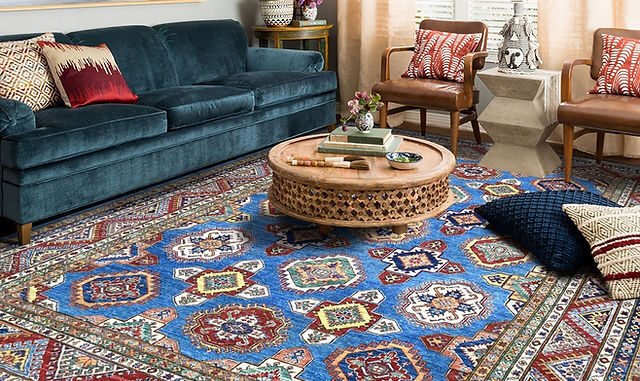
Kazakhstan carries a rich handicraft heritage across the vast steppes shaped by centuries of nomadic cultures. One of the most striking pieces of this heritage is Kazakh carpets. Although they may appear to many today as decorative objects, Kazakh carpets are in fact a powerful narrative language that transforms a society’s memory, beliefs, relationship with nature and way of life into motifs.
Kazakh carpets are not merely an aesthetic “floor adornment”; they can be read as cultural documents that contain traces of a family, a period and a journey in every knot. For this reason, carpets are considered among the clearest examples reflecting the steppe culture’s understanding of art intertwined with everyday life.
From the needs of a nomadic life to cultural identity
The historical development of Kazakh carpets took shape alongside the practical requirements of nomadic life. For communities living on the move across the steppe, the carpet was a functional item that provided insulation inside the yurt, served as bedding, partitioned space and, at the same time, gave a sense of “belonging.” As the transition to a settled life accelerated over time, carpets ceased to be merely items of necessity and became family heirlooms, status symbols and carriers of identity.
In this respect, Kazakh carpets represent far more than a household object. In many examples, motifs are worked like a symbolic record system of migrations, social transformations and even family memories. In short, the patterns on a carpet carry meaning rather than serving as mere “ornament.”
Colors are more than colors: a symbolic language
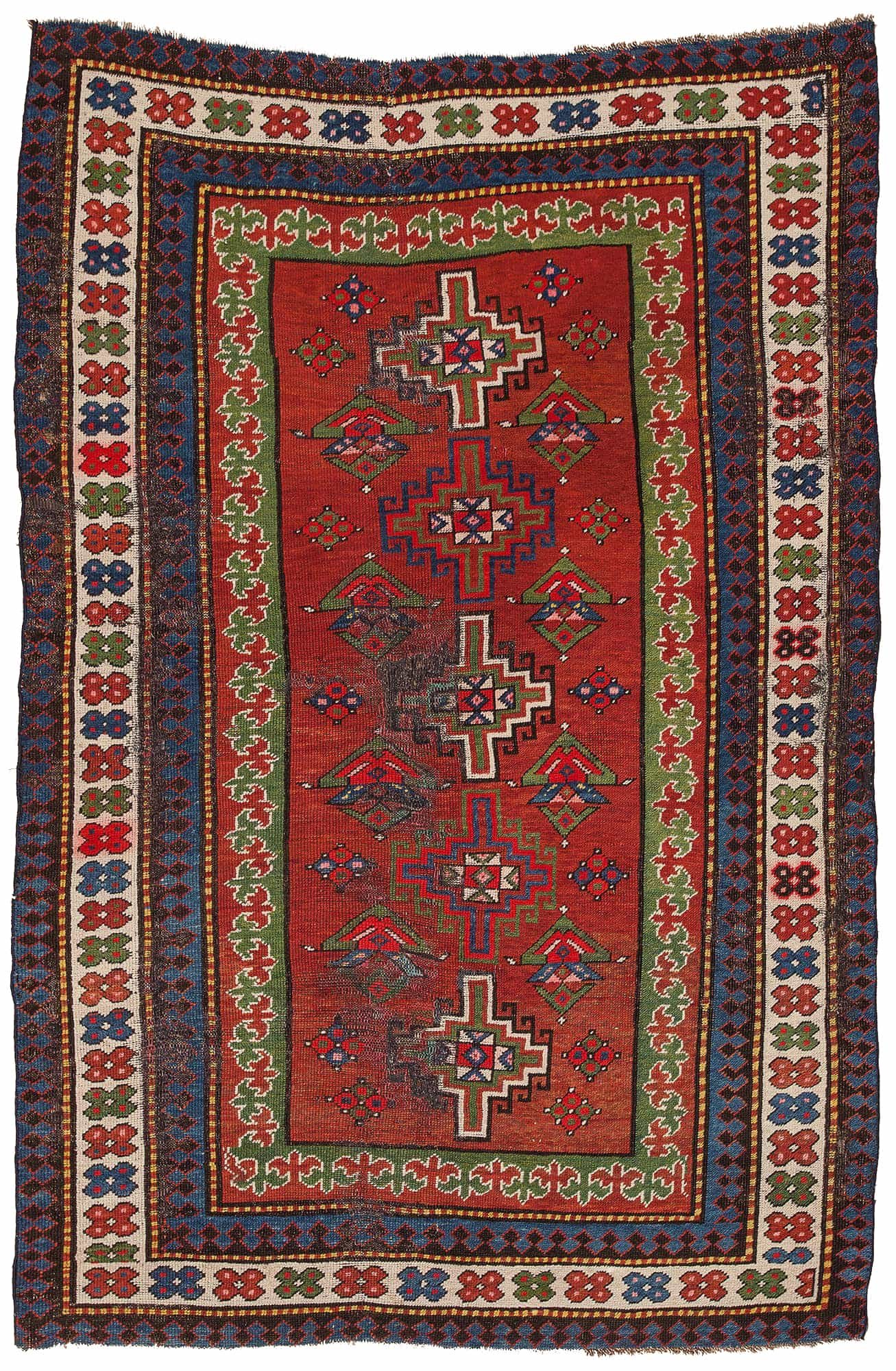
The colors used in Kazakh carpets often carry a cultural resonance beyond visual appeal. Each tone opens a door to a commentary on nature and life:
- Red is associated with strength, protection, prosperity and luck.
- Blue evokes ideas of peace, balance and connection with the universe through the sky and water.
- Green symbolizes the continuity of nature, renewal and the resilience of life.
- Yellow and white stand out with positive meanings such as warmth, energy, hope and purity.
This color palette transfers the Kazakh people’s relationship with the steppe not only to a visual plane but also to a spiritual and intellectual one.
 Traces of the steppe in the motifs
Motifs are the strongest identity markers of Kazakh carpets. Geometric arrangements, nature-inspired symbols and occasional animal figures are common. Rose motifs, moon-and-star–like forms, cross-lines or wave effects can convey ideas of protection, abundance, harmony and movement. The horse figure, in particular, stands out in Kazakh culture not merely as an animal but as a fundamental symbol associated with the rhythm of life, freedom and historical memory.
Material and technique: durability built with labor
Traditional Kazakh carpets are woven mostly from wool and, in some examples, silk. Wool stands out for its durability against the harsh climate of the steppe and its warmth, while silk is preferred to add elegance, sheen and visual finesse. A significant portion of the dyes used in weaving are derived from natural sources, which helps carpets acquire a characterful, deepening color over the years.
Because they are handwoven, each piece is considered unique for its small differences. This uniqueness transforms production from a serial process into a personal labor woven with mastery and patience.
The place of traditional heritage in the modern world
Today, while preserving their traditional motifs and colors, Kazakh carpets are being reinterpreted through a contemporary design language. This allows carpets to be valued not only as a local heritage but also as cultural ambassadors on an international scale. With the interest of collectors and the design community, Kazakh carpets are increasingly positioned not as mere “decorative products,” but as artistic and cultural narrative objects.